Welcome to Roots & Branches
This five-class series is your foundation in Kabbalistic wisdom. It is designed for anyone, regardless of background or belief, who wants to understand the deeper forces that shape our lives and learn how to work with them consciously.
Each class builds on the one before it, creating a complete map of creation, from the infinite light before the universe existed to the practical tools you can use every day. Eliyahu has condensed decades of study into these five teachings so you can begin applying this wisdom immediately.
Watch the lecture, read the companion notes, sit with the reflection questions, and mark each class complete when you are ready to move forward. There is no rush. Take the time you need. The wisdom has waited thousands of years for you.
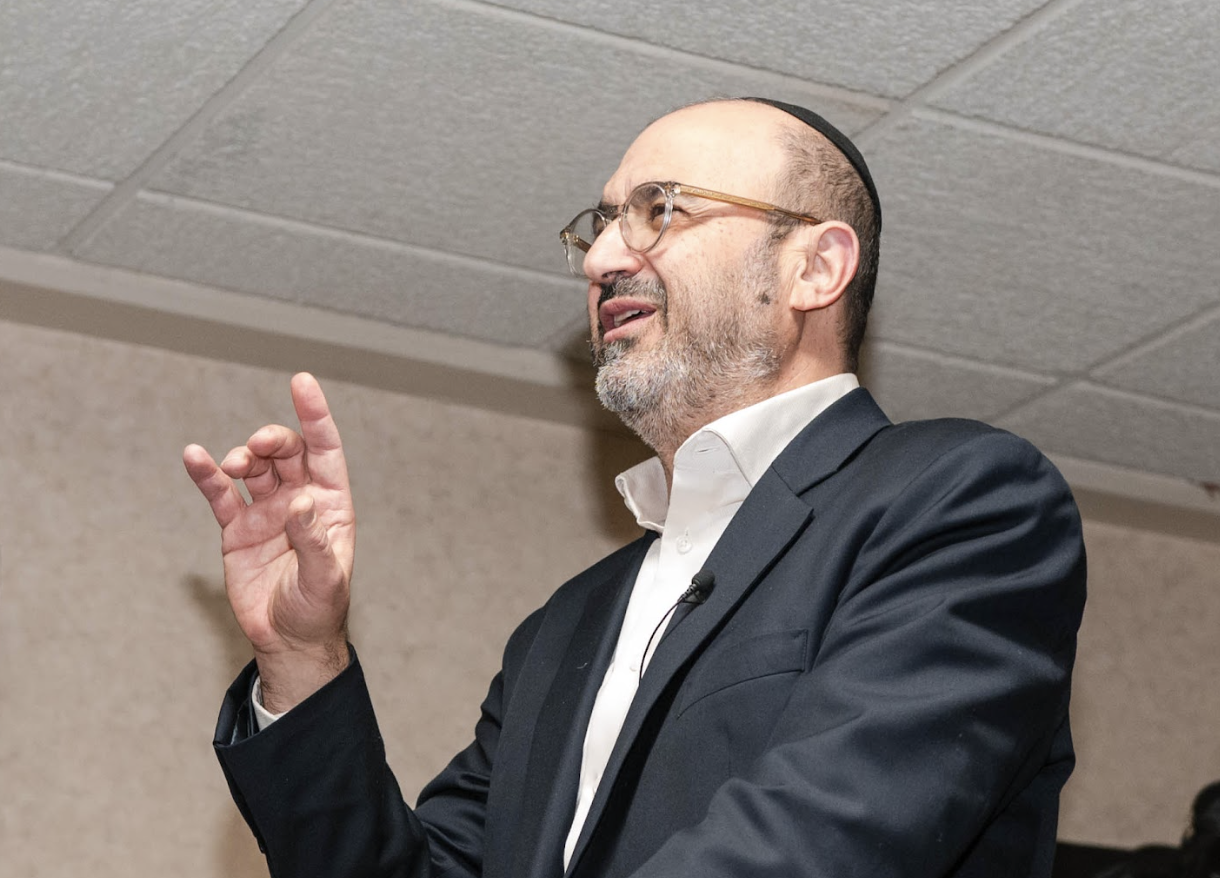
Eliyahu Jian
Eliyahu Jian has devoted over 30 years to teaching Kabbalah. Born in Israel, he was drawn to mysticism from an early age, later studying intensively under master teachers for five years before moving to New York in 1990 to share this wisdom with the world. He has given over 1,000 lectures and worked one-on-one with thousands of people across the globe, helping them find clarity, purpose, and transformation through Kabbalistic teachings.
The Two Universes: Finite & Infinite Reality
The foundation of all Kabbalistic understanding. What exists beyond the physical world, the difference between vessel and light, and why you are here.
Class 1 Lecture with Eliyahu Jian — Watch on YouTube
Two Realities
Kabbalah begins with a profound premise: there are two universes, not one. There is the finite reality, the physical world that you experience through your five senses, and there is the infinite reality, the source from which everything comes. Most people live their entire lives experiencing only the finite. They believe what they can see, touch, hear, taste, and smell is the whole picture. Kabbalah teaches that this is only a fraction of what exists.
The five senses are tools for navigating the physical world, but they are limited. They were never designed to perceive the infinite. Kabbalists call this infinite source Ein Sof, the endless light. It has no boundary, no beginning, and no end. The physical world, by contrast, has boundaries everywhere. Everything here has a beginning and an end, a shape and a limit.
Vessel and Light
In Kabbalah, all of creation is understood through two fundamental forces: the vessel (the receiver) and the light (the giver). The Creator is pure giving, endless fulfillment without any need. The vessel was created to receive that fulfillment. You are a vessel. Your soul is designed to receive the light of the Creator.
But there is a problem. When a vessel only receives without earning, it experiences what Kabbalah calls bread of shame. Think of it this way: when someone gives you something you have not worked for, there is an emptiness underneath the receiving. You may enjoy it for a moment, but the joy does not last. This is not a punishment. It is simply how consciousness works. The deepest fulfillment comes from what you earn.
Bread of Shame (Nahama D'Kisufa): The discomfort the soul feels when receiving something it has not earned. This manifests in the physical world as depression, anxiety, restlessness, or a feeling of meaninglessness despite having material abundance. True happiness requires earning through effort and transformation.
From Reactive to Creative
Eliyahu teaches that every human being operates in one of two modes: reactive or creative. Reactive consciousness is when you respond to life based on impulse, habit, fear, or emotion. You react to what happens to you. Creative consciousness is when you choose your response. You create your experience instead of merely reacting to it.
The entire journey of the soul, in Kabbalistic terms, is the movement from reactive to creative. From being controlled by circumstances to becoming a conscious creator of your life. This is not about positive thinking. It is about taking genuine responsibility for who you are and how you show up in the world.
The Dirty Window
Eliyahu shares a powerful teaching: imagine the sun is shining, but your window is dirty. You might look outside and think the sun is dim. You might complain about the lack of light. But the problem is not the sun. The problem is the window. The light of the Creator is always shining. It never stops. When we feel disconnected, empty, or lost, the issue is never with the light. It is with our vessel. The work is not to ask for more light. The work is to clean our window.
Reflection Exercise
Key Takeaways
There are two universes: one is finite and limited by the five senses, the other is infinite (Ein Sof). You are a vessel designed to receive light, but the deepest fulfillment comes from earning that light through your own transformation. The path is from reactive consciousness to creative consciousness. The light is always available. The work is on your vessel, your window.
Creation & the Purpose of Humanity
The map of creation. The ten Sefirot, Tzimtzum (the great contraction), and why the Creator withdrew the light so we could earn it.
Class 2 Lecture with Eliyahu Jian — Watch on YouTube
Ein Sof & the Ten Sefirot
Before anything physical existed, there was only Ein Sof, the endless light of the Creator. This light filled everything. There was no space, no time, no separation. There was only perfect unity between the giver (the Creator) and the receiver (the original vessel, the soul of all souls).
But the vessel, having received everything without earning it, felt bread of shame. It said, in essence, "I do not want to only receive. I want to be like the Creator. I want to earn my fulfillment." Out of this desire, the Creator contracted the light, creating what Kabbalah calls Tzimtzum, the great contraction. This contraction created the space for our physical universe to exist.
The light then flowed back into this space through ten stages, known as the ten Sefirot. These are not places. They are levels of consciousness, filters through which the infinite light steps down into the finite world. From Keter (crown) at the top to Malkhut (kingdom) at the bottom, each Sefirah represents a different quality of divine energy. Together, they form the Tree of Life, the map of creation.
Tzimtzum (Contraction): The Creator withdrew the infinite light to create a space where we could exist as independent beings. Our entire universe exists within this contracted space. The purpose of Tzimtzum was not punishment but love: the Creator gave us the opportunity to earn the light on our own, which is the only way to experience true, lasting fulfillment.
Masakh: The Curtain
One of the most practical concepts in Kabbalah is the Masakh, the curtain or screen. Imagine a movie projector: the light comes from the projector, but you can only see the movie because there is a screen to reflect the light back. Without the screen, the light just passes through and you see nothing.
In the same way, the Masakh is your ability to receive light in a measured way, not all at once, but in proportion to what you have earned. When you say no to something you desire but have not earned, you are building your Masakh. When you resist an impulse, when you choose the harder right over the easier wrong, you strengthen your curtain. This is how the soul grows.
Direct Light and Returning Light
Kabbalah teaches that there are two types of light: direct light (Or Yashar), which flows from the Creator to the vessel, and returning light (Or Chozer), which is the light the vessel sends back by choosing not to receive selfishly. The returning light is actually more powerful than the direct light, because it carries the consciousness of the vessel's choice. When you choose to give instead of take, you generate returning light. This is the mechanism by which we become like the Creator.
Independency
Eliyahu teaches that the greatest gift a parent can give a child is not comfort but independence. When you give your children everything, you take away their ability to earn. You create bread of shame for them. The same is true in the spiritual dimension: the Creator does not simply give us everything because endless unearned receiving produces suffering, not joy. The gift of Tzimtzum was the gift of independence, the chance to become creators ourselves.
Reflection Exercise
Key Takeaways
The Creator contracted the infinite light (Tzimtzum) to give us the chance to earn fulfillment independently. The ten Sefirot are the levels through which light filters into our world. The Masakh (curtain) is your ability to resist selfish receiving and earn the light through conscious choice. Returning light, generated through giving, is more powerful than direct receiving. True independence is the greatest spiritual gift.
Yetzerah: Understanding the Inclination & Negativity
The force that tests you, why it exists, and how overcoming it is the mechanism for building your soul. The escape room of life.
Class 3 Lecture with Eliyahu Jian — Watch on YouTube
The Evil Inclination
Across every spiritual tradition, there is a recognition of a force that pulls us toward what is easy, selfish, or destructive. In Kabbalah, this force is called the Yetzer HaRa, the evil inclination. It has been called many names throughout history: Satan, the angel of death, the tempter. But Kabbalah teaches something surprising: this force is not your enemy. It is your trainer.
According to the Zohar, the evil inclination is born with you. From the moment you enter this world, it is already operating. It inflates the ego. It tells you that you are the center of the universe. It pushes you toward reactivity and selfishness. This is not a punishment. It is the design of creation.
Why the Temptation Exists
Eliyahu explains this through the story of the escape room. His family went to an escape room, accidentally choosing the hardest level. They struggled. They were stuck. But when they finally solved it and escaped, the feeling was extraordinary. That feeling of overcoming, the elation of earning your way through a challenge, is why the Yetzer HaRa exists.
Without temptation, there is no free will. Without free will, there is no earning. Without earning, there is bread of shame. The Creator did not put the evil inclination here to punish you. The Creator placed it here to give you the opportunity to grow. Every time you overcome a temptation, you build your soul. Every time you resist a reactive impulse, you become stronger. The inclination is the resistance that builds spiritual muscle.
Yetzer HaRa (Evil Inclination): Born with every person, this is the force of temptation and reactivity. It is not evil for evil's sake. It is the testing mechanism that allows free will to exist. The Zohar teaches that the good inclination (Yetzer Tov) arrives at age 13, creating the choice between reactive and creative consciousness. Overcoming the Yetzer HaRa is how the soul earns the light.
Free Will & the Two Inclinations
The Zohar teaches that at age 13 (in the metaphysical sense, the age of spiritual maturity), a person receives the Yetzer Tov, the good inclination. Now there is a genuine choice: one angel on the right, one on the left. This is free will. Before this, the child is operating primarily on impulse and instinct. After this, every choice becomes meaningful.
The free will is this: when you want to do something reactive, do you follow the impulse, or do you choose the higher path? Every moment of choice is a moment of soul building. The evil inclination is not trying to destroy you. It is trying to make you prove what you are made of.
Mind and Body
Eliyahu teaches that the Yetzer HaRa operates on two levels: the mind and the body. In the mind, the battle is about what you see, hear, say, and think. Are you consuming negativity? Are you speaking destructively? Are you allowing your thoughts to spiral? These are temptations of the upper realm. In the body, the battle is about physical impulses and desires. Can you tell your body what to do? Can you control your appetites? The person who masters both mind and body has built a powerful Masakh, a powerful curtain.
Reflection Exercise
Key Takeaways
The evil inclination is not your enemy but your trainer. It exists to create the conditions for free will, which is how we earn the light. The Yetzer HaRa is born with you; the Yetzer Tov arrives at spiritual maturity. Every time you overcome a temptation, you build your soul. The struggle operates in both the mind (what you think, see, say) and the body (what you do). Challenges are the escape room of creation, and overcoming them is the point.
Prayer & Meditation: The Science of Kavanah
What prayer actually is in Kabbalah, why most prayer goes unanswered, and the power of intention (Kavanah) to elevate your consciousness.
Class 4 Lecture with Eliyahu Jian — Watch on YouTube
What Is Kavanah?
Before the word "meditation" became popular, the Kabbalists had a word for it: Kavanah. It means direction, intention, or the pointing of your consciousness. Kavanah is not about sitting quietly and emptying your mind. It is about knowing why you are doing what you are doing, when you are doing it.
Every action has a kavanah, whether you are aware of it or not. When you eat, why are you eating? When you speak, why are you speaking? When you pray, what is the real intention behind your words? Kavanah is the constant practice of examining the motive behind everything you do. It is the difference between living on autopilot and living with purpose.
Why Most Prayer Goes Unanswered
Eliyahu teaches something that may surprise people from any religious background: most prayer is not real prayer. When a person sits down and says, "God, give me money. God, give me a soulmate. God, fix my problems," they are treating the Creator like a delivery service. They are trying to use the infinite to serve their finite desires.
Real prayer, according to Kabbalah, is not about asking for things. It is about asking to become better. It is saying, "Help me climb to a higher level. Help me see what I need to change. Help me become a person who can serve others more." The purpose of prayer is elevation, not acquisition.
Kavanah (Intention/Direction): The pointing of your consciousness. It means examining the why behind everything you do, say, and think. In prayer, kavanah transforms empty words into a vehicle for spiritual elevation. Without kavanah, prayer is just talking. With it, prayer becomes a technology for connecting to higher consciousness.
Egoism vs. Altruism
One of the deepest struggles Eliyahu describes is the war between egoism and altruism. Egoism is natural, he teaches. We live in a physical universe that constantly pulls us toward "what is in it for me?" Even spiritual pursuits can be egoistic: "How much will I benefit from being spiritual? What will I get when I die?"
True altruism, the kind that generates real spiritual growth, is giving without any expectation of return. Not giving because people will see you. Not giving because it makes you feel good about yourself. Giving because your soul's purpose is to be connected to the divine, and the way you connect to the divine is through genuine service to others.
Emunah: Faith Above Knowledge
Eliyahu introduces Emunah, which translates as faith or certainty, but it means something deeper than belief. Emunah is the trust that the Creator's plan is operating even when you cannot see it. It is the willingness to act on what you know is right even when the results are not yet visible. The Kabbalists teach that the finite mind cannot fully comprehend the infinite Creator. Trying to fully understand God with your intellect is like trying to hold the ocean in a cup. Emunah is the faculty that allows you to relate to what is beyond your understanding.
The Real Purpose of Prayer
True prayer is a technology for spiritual climbing. You are below the curtain (Masakh), living in the contracted universe. Through genuine prayer with kavanah, you begin to climb through the Sefirot, ascending toward the light. The Kabbalists describe specific stages of prayer, each corresponding to a level of consciousness. Happiness, Eliyahu teaches, is the foundation. You cannot pray from a place of desperation and expect elevation. You begin with gratitude, with joy for what you have, and from that elevated state, you ask for the strength to grow further.
Reflection Exercise
Key Takeaways
Kavanah is the direction of your consciousness, the "why" behind everything you do. Most prayer fails because it treats the Creator as a delivery service rather than a source of elevation. Real prayer asks to become better, not to receive more. Emunah (faith) operates above the intellect, allowing connection to what the finite mind cannot comprehend. Happiness and gratitude are the foundation from which effective prayer begins.
Mitzvot & Torah: Conscious Action & Love of Others
The three-column system that creates balance in your life. How study, conscious action, and kindness work together to connect you to the divine.
Class 5 Lecture with Eliyahu Jian — Watch on YouTube
Beyond Positive Thinking
In the final class, Eliyahu makes an important distinction. Many people pursue personal development, therapy, motivational programs, or positive thinking. These are wonderful starting points. But Kabbalah teaches that the goal is not merely to feel better about yourself. The goal is to connect to the light of the Creator.
If your self-improvement has no connection to something greater than yourself, it remains egoistic, even if it looks spiritual on the surface. The north star, the anchor, must always be: "I am becoming better so that I can connect more deeply to the divine and serve others from that connection." Without this orientation, personal growth becomes another form of self-absorption.
The Three-Column System
Kabbalah teaches that everything in creation operates on a three-column system, mirroring the three pillars of the Tree of Life. In practical terms, Eliyahu explains three essential practices that create spiritual balance:
Torah (Study/Central Column): The study of sacred wisdom. This is the central column, the balancing force. It provides the knowledge and understanding needed to guide your actions and intentions.
Mitzvot (Commandments/Left Column): Conscious actions. The 248 positive commandments open channels for light to flow into your life. The 365 negative commandments (things to refrain from) build the Masakh, the curtain that gives you the vessel strength to hold that light.
Ma'asim Tovim (Good Deeds/Right Column): Acts of genuine kindness. This is the right column, the force of giving. Not kindness for recognition or self-satisfaction, but kindness because your soul's purpose is to emulate the Creator, who gives endlessly.
Opening Channels, Building Vessels
Eliyahu explains that the positive commandments (the things you should do) function like channels or pipes. When you perform a positive action with kavanah, you open a channel for the Creator's light to flow into your life. The negative commandments (the things you should refrain from) function like the Masakh, the curtain. They build the strength of your vessel so you can hold the light without it destroying you or inflating your ego.
This is why both action and restraint are necessary. If you only receive (only open channels), without building your vessel (without restraint), the light becomes chaotic, manifesting as addiction, obsession, or ego inflation. If you only restrain without opening channels, you become rigid, closed, and disconnected. The balance of the three columns is the architecture of a fulfilled life.
The Triangle of Connection
Eliyahu describes what the Kabbalists call the "magic triangle." When you give to another person purely for the sake of connecting to the Creator (not for recognition, not for reciprocation), something extraordinary happens. Your act of kindness becomes a circuit: you give to the other, the energy of that giving rises to the Creator, and the Creator sends light back to you. This three-way connection, this triangle, is the highest form of spiritual practice.
This is why Kabbalah does not teach isolation or retreat from the world. The work happens in relationship, in community, in service. Other people are not obstacles to your spiritual growth. They are the arena in which your growth becomes real.
Reflection Exercise
Key Takeaways
Personal development without connection to the divine remains egoistic. The three-column system (Torah, Mitzvot, Ma'asim Tovim) creates spiritual balance: study provides knowledge, positive actions open channels for light, and restraint builds the vessel to hold it. The magic triangle of giving, where kindness connects you to both others and the Creator, is the highest spiritual practice. The work of the soul happens in relationship, not in isolation.
For Those Who Want to Go Deeper
Private sessions are for those who want personalized guidance in applying Kabbalistic wisdom to their specific life circumstances. There is no obligation. The classes you have completed here are a gift offered freely.
Inquire About Private SessionsAvailable worldwide via video call.